
By: Grady Hofeditz and Charlie Tobler
In January 2025, Los Angeles faced unprecedented wildfires that burned communities, torched thousands of structures, and claimed numerous lives. The fires, which were exacerbated by strong Santa Ana winds and lengthy drought conditions, reiterated the urgent need for robust disaster response and long-term recovery strategies and policies.
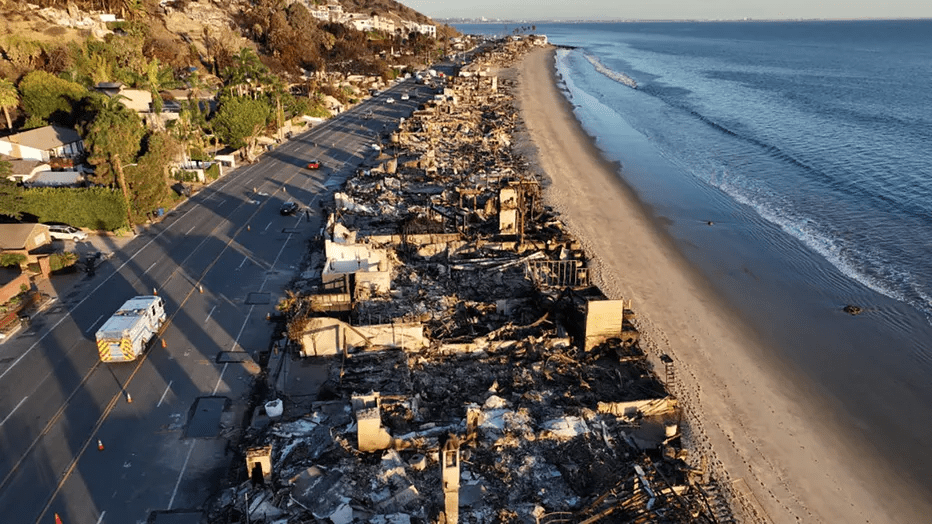
The fires burned more than 40,000 acres, destroying at least 12,000 structures (such as homes, schools, and businesses). Notably, the Pacific Palisades neighborhood suffered extensive damage, being the location of the most structural damage, with nearly 2,000 structures destroyed. The fires significantly deteriorated the air quality, with particulate matter levels reaching hazardous levels of up to 480 micrograms per cubic meter (for reference, the typical AQI in LA is ~40). LA residents faced serious health conditions as a result, including respiratory problems and cardiovascular stress. Additionally, the fires caused substantial damage to local ecosystems, consequently affecting the wildlife habitats and water quality, as hazardous materials polluted the coastline and other ecosystems. Furthermore, the economic impact of the wildfires is staggering, with losses projected to exceed $20 billion, a new record for wildfire-related insurance claims in U.S. history. The total economic loss is estimated at $50 billion, affecting various sectors, including agriculture, real estate, and tourism industries.
In response to the tragedy, California Governor Gavin Newsom signed a $2.5 billion relief package to help support emergency response activities, speed up home rebuilding approvals, and aid school districts in reconstruction efforts. Additionally, the Los Angeles Unified School District has allocated $2.2 billion to repair and rebuild schools damaged by the fires.
As Los Angeles begins the recovery and rebuilding process, experts are increasingly emphasizing the importance of developing coherent fire strategies, encouraging community collaboration to reduce fire risks, and ensuring fire preparedness at all governance levels. The new general recommendation is for everyone to prepare a quick fire-escape bag, just to be prepared in case an emergency arises. Additionally, there is a call for carefully selecting building sites, avoiding high-risk areas, and adhering to stringent fire-resistant building standards to minimize future damage. Furthermore, taking aggressive action against climate change through ecosystem management, water conservation, and adapting to extreme weather patterns is essential to mitigate future wildfire risks.
The unexpectedness of extreme weather conditions made this matter all the worse. The recent wildfires in Los Angeles have highlighted the critical need for comprehensive planning, community coordination, and robust political will to enhance resilience against future disasters. We are hopeful and wishing that the LA community is able to quickly rebuild and to be stronger and more prepared for the challenges ahead. The events in Los Angeles serve as a powerful reminder to consistently prepare for disasters and emphasize the significance of response, prevention, and action.
 The Bishop Kelly Newspaper