
This past summer a friend and I were sitting at my kitchen counter getting ready to head to Barber Park to float the Boise river with our friends. All of a sudden, my friend says, “You know, I don’t really understand the importance of voting. I mean, I don’t plan to vote. My life won’t change because of who’s president or governor. Everything will be fine.”
All of a sudden, I feel blood rushing to my face. It’s like there’s a shrill sound playing somewhere in my head, and I fight the urge to burst out something like, “But our founding fathers fought wars and battles so we could have representation in government!” or, even less helpful, a sarcastic, “Sure, just go ahead and perpetuate the stereotype that young people don’t care about politics and civil engagement.” But I know that my first profound statement is actually just a fact and that my second is really, pretty much just trying to shame my friend out of her civil apathy, which is ineffective at best and offensive at worst. So I bite my tongue, take a deep breath, and do my best to offer her a strained smile and go to my happy place, if not for the sake of my psyche, then for the sake of our friendship.
All these months later, and I still can’t fully get that interaction out of my head. Because, although my friend cared little for politics, and while I can’t say I love them either, I kept finding myself getting drawn back in due to certain candidates and issues that were important to me. Whether it was the time I spent canvassing out in rural parts of Idaho for and with some pretty incredible state-level candidates, or my involvement as plaintiff in a recent class-action lawsuit, my heart seemed to keep saying, “This is important. This is the work.” So, I stayed involved, I stayed engaged, and I did my best to do what I thought was right, even when this meant having difficult conversations with family and friends.
Regardless of my experience, what I’m trying to say here is simply that if you don’t care about politics, you should. Not because it’s easy or fun, or because of the sacrifice made by soldiers in the Revolutionary War or those who marched for Women’s Suffrage in the 1920s or for Civil Rights in the 1960s— though this history should in no way be disregarded when it comes to thinking about whether or not to vote. I’m not saying you should vote because Idaho’s youth should be trying to fight off any kind stereotype (though voter turnout for Idahoans aged 18-25 is a disheartening 18.4% as of the last general election).
You should vote because, believe it or not, someday, sometime, there will be a bill or an issue in our state that affects you. Trust me when I say that there already are bills being passed every legislative session that affect Idaho’s youth. These bills aren’t just affecting young people, they’re affecting students, patrons of public institutions, members of all communities, young women, etc.. And on that day, when that bill is being discussed in committee or on the Senate floor or in the House or Representatives, you are going to want a legislator at bat who (metaphorically) swings the same way you do.
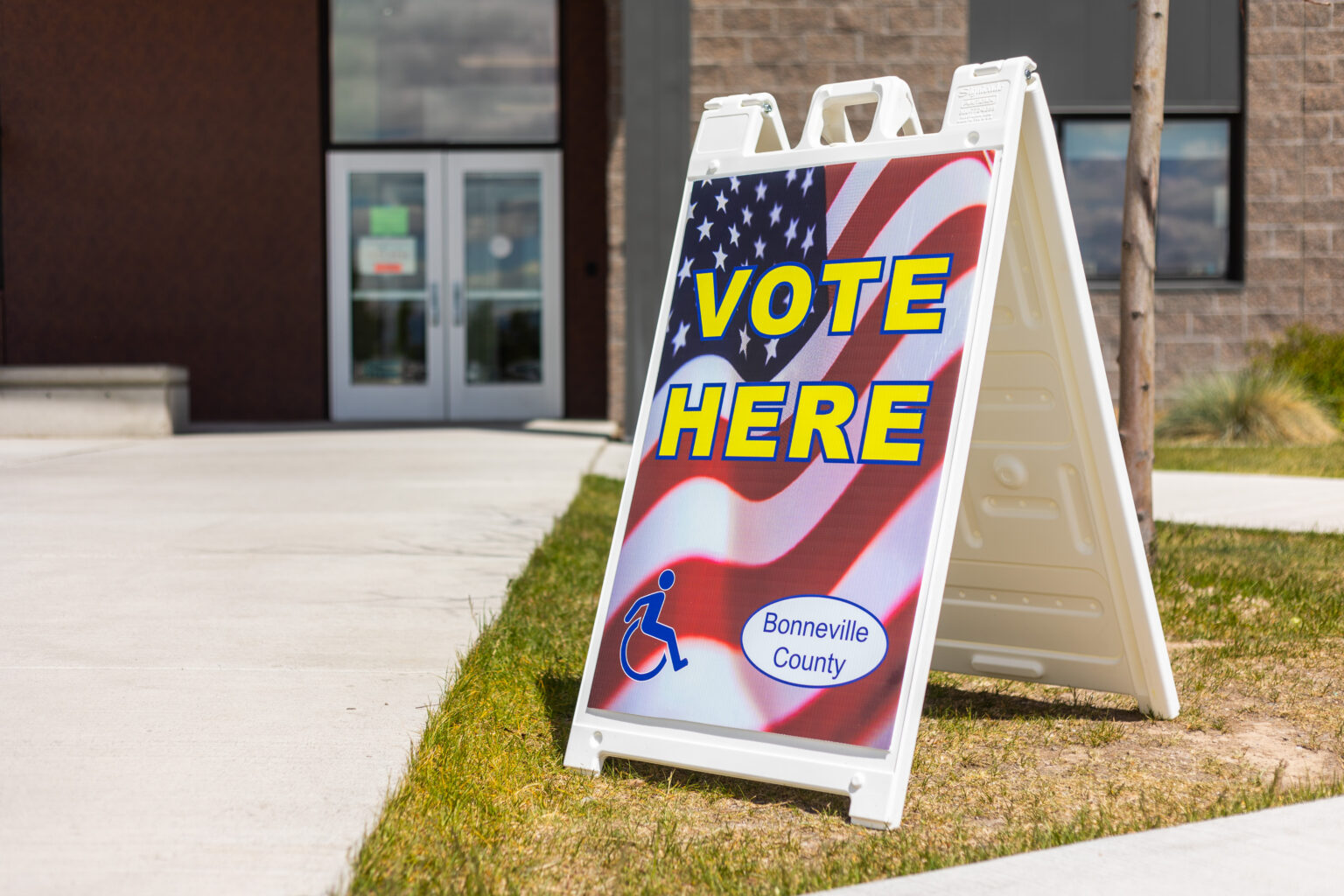
So this upcoming election, I encourage you to vote like you mean it. And don’t just vote, do your very best to come into this election educated and with intention. Vote because it affects our community, and you’re in it. Vote because it matters.
 The Bishop Kelly Newspaper