
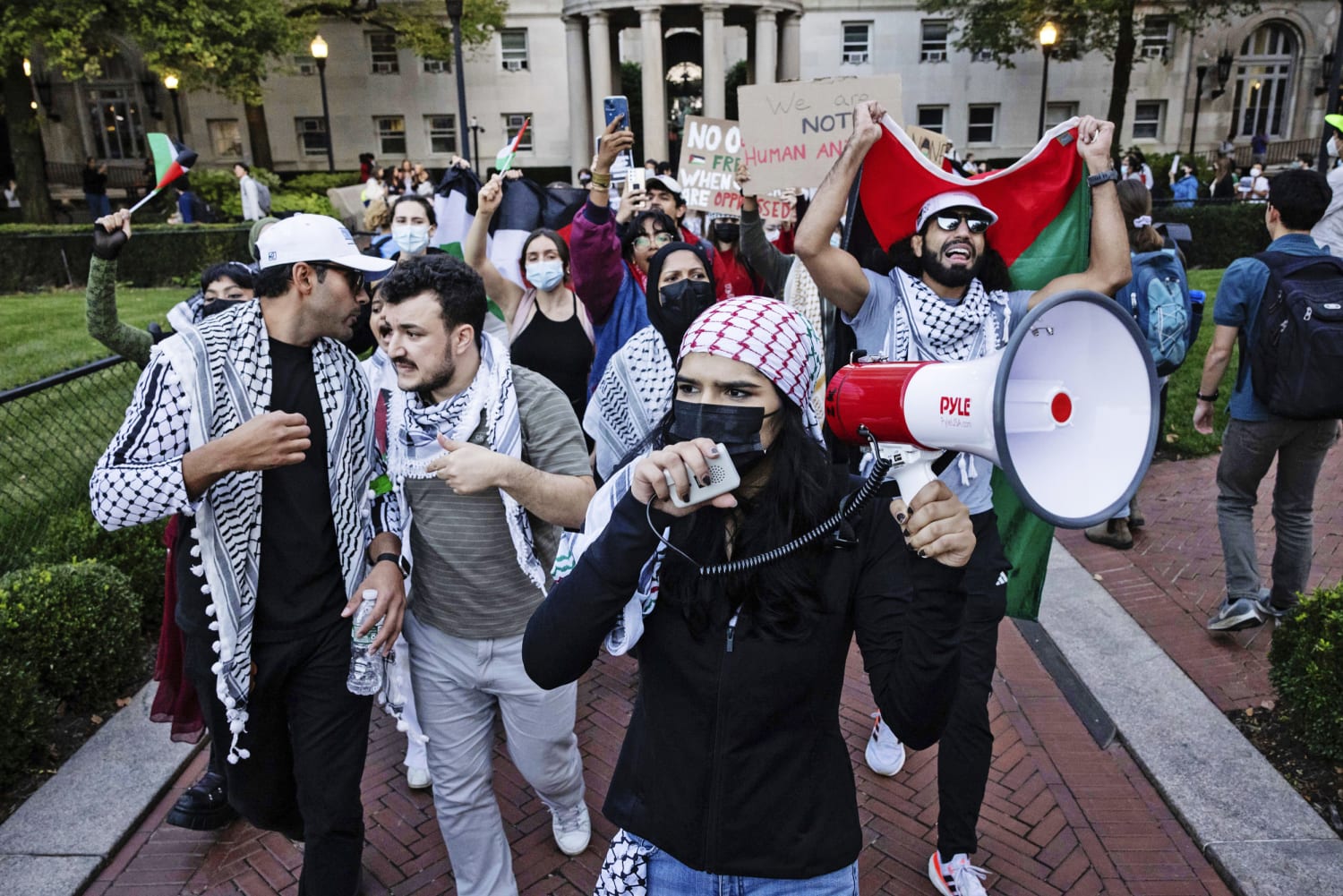
In our modern age of technology, all we have to do is open any news outlet or do a quick Google search, and we are flooded with images and headlines detailing how violent and contentious the war in Gaza conflict has been and continues to be. In the states, the response to this conflict has led to riots, expulsion, school administrators and celebrities to face harsh criticism, and those who have family in Israel/Palestine to be deeply affected.
Living in Idaho, it can be easy to feel like we remain untouched by such conflicts, but this isn’t necessarily true for countless other American families and communities. My time in New York City this past summer shed light on the fact that not only are educational institutions all over the country addressing the Israel/Palestine conflict in school settings, but students are discovering their administrations ineptness to do so along the way.
One such student, Francesca Fayed, who is sixteen and a rising senior at the American School of Doha, explained hearing from a classmate about how their family in Gaza was being directly impacted.
“They told us about how they had to escape from the Egyptian side, how they weren’t receiving aid, how their house was bombed, all the things they had to sacrifice,” Fayed said.
Fayed then went on to talk about her school administration’s response to the conflict. “They allowed us to hold a protest,” she said. “Kids dressed in the colors of the Palestinian flag and wore keffiyehs (a traditional head garment worn by many Palestinians)…then we marched on the school.”
Fayed said, “The protest was held by the EFP (Equality for Palestine) Club, and it was meant to show solidarity for those experiencing violence in Gaza.”
While Fayed’s school’s response to the Israeli/Palestine conflict has been extremely proactive, the same can’t be said for every school.
Another student, Indie, a high schooler from Philadelphia, stated, “At my school, how administration dealt with discussing the conflict was really weird. Since we’re a Quaker school, we kind of had to dance around the topic.”
Indie explained, “Our school is very Jewish, but also extremely liberal. So there’s a lot of debate, but actually many people are pro-Palestine. But a bunch of parents got mad that administration didn’t say anything, so my school just said they were in support of peace.”
From there, Indie seemed to become more frustrated, saying the discussions they had at his school, “[Weren’t] informative at all.” Rather than a public statement sent out to parents, as was done at Indie’s school, he believed that “small class discussions with teachers where people can be honest about their actual viewpoints” would be a more effective way to handle discussing conflict in future.
Another student, Josephine Seum Souk, a rising junior at Lycee Francois in New York, says that her school took a much different approach to discussing the Israel/Palestine conflict.
“We discussed the history behind the creation of Israel and the Palestinian territory, but we didn’t really discuss the political side of it. We were just given the historical facts,” says Seum Souk, who revealed it was her AP Human Geography teacher teaching her and her peers this information.
Seum Souk also explained that there are many more Jewish than Muslim kids who attend Lycee Francois, and that while, “usually, people try not to get too political” there have been times when her school administration has had to limit student action and discussion about the conflict.
“The Jewish Community Club did a bake sale, but things got too political when the students wanted to donate the money made from the bake sale to Israel, so the money had to be donated to humanitarian aid in general…but many people still donated their own money to just the Israeli side of things,” Seum Souk said.
“I feel like a lot of high school students lack the information, history, and context to have an educated opinion about the issue. I think my school could’ve done more to host assemblies for the whole school. It was just my class who got educated on the creation of Israel, so I think people should have access to more information,” Seum Souk added.
Henry Gardner, who is sixteen and lives in the Bay Area, says that at his high school “there wasn’t much discussion at all. While [the conflict] was mentioned in board meetings, there was never any student discussions.” He added that he didn’t think there was enough discussion, and that “there probably should’ve been more.”
Gardner, who is Jewish and very involved in the Jewish community, recognized that this did affect his opinion of the war. “Obviously social media plays a role because I see a lot of stuff on social media, which may tilt away from the perspective that I get as someone who is Jewish,” he said.
“I think it’s important to talk about it. Especially when it’s an issue like this, where it’s so controversial. We have to talk about it, and let students speak their minds. Otherwise it all gets bottled up, which creates a lot of tension,” Gardner said.
While there is no clear way to best discuss the Israel/Hamas conflict for every school, as Fayed put it, the belief that “no innocent civilian should be dying” seems to be something we can all agree on.
 The Bishop Kelly Newspaper