
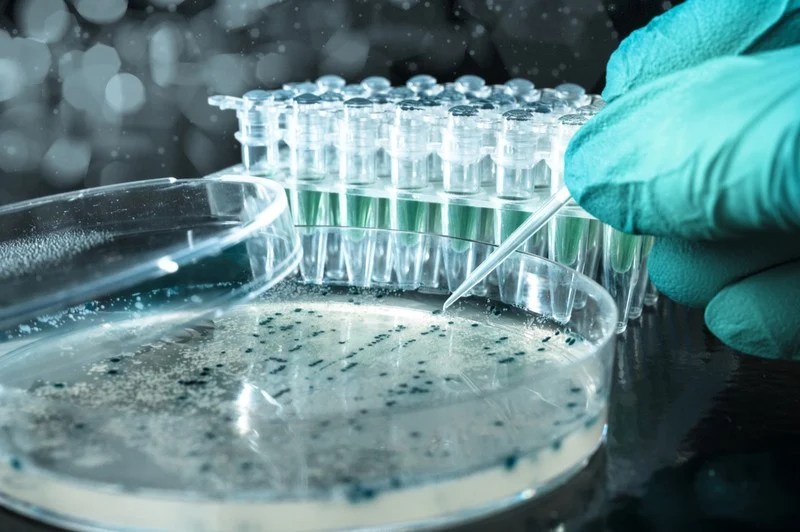
Labiotech, 2020
No more than a few decades ago, humanity’s biggest fear was being ruled by robots. Nowadays, some people still probably believe that it’ll happen. Although their predictions may eventually come true, today’s scientists are trying to flip the narrative.
Currently, biomedical researchers and health care professionals across the country are launching analyses concerning the role of artificial intelligence (AI) in medicinal innovation and exploration. Drug creation, disease detection, and x-ray examination–some of health care’s most critical sectors–are all areas that AI has prospective uses within. Thankfully, these developments are coming at just the right time.
In their January report, the Population Reference Bureau notes that as a result of the baby boom which took place in the ‘50s and ‘60s, “the number of Americans ages 65 and older” will jump from “58 million” to “85 million” by the year 2050. Nearly 30 million more Americans will depend on the already broken health care system that exists in the States’. What’s critical to take note of is that old age increases the likelihoods of chronic pain, cancer, and sensory degradation for virtually every single one of us.
So, how much more can researchers and physicians achieve with the help of AI?
For starters, physicians nationwide are realizing that the most advanced AI models detect cancer in a more timely and precise manner than the majority of pathologists and oncologists. The Association of American Medical Colleges wrote in March of 2024 that machine learning systems detect cancer by taking “high resolution” images of patients and highlighting potentially malignant “patterns that represent cells and tissue types.”

MRI images as seen by a physician (top row). MRI images analyzed by artificial intelligence (bottom row) highlighting the tumor more accurately and using colors to identify the probability of cancer. Image taken by Baris Turkbey, National Cancer Institute.
Not only can AI detect cancer, but it can also develop treatment courses for patients to undergo. The AAMC also observes that certain technologies consider “characteristics of the cancer” as well as “data from the patient’s medical history” to curate a plan for the future.
With this in mind, artificial intelligence systems have a long way to go before they reach perfection. False diagnoses, learning biases, and misinterpretation are still relatively common issues with contemporary machinery. However, as systems continue to scan images and revise their algorithms, they have the potential to become fool proof.
Beyond just examining x-rays, researchers are discovering that AI has the capabilities to create entirely new drugs aimed at targeting some of today’s most dangerous diseases. Earlier this year, Stanford Medicine researchers Kevin Zou and Kyle Swanson created SnytheMol, a generative AI model designed to synthesize drugs, and came up with “six novel drugs” holding the possibility to kill Acinetobacter baumannii, “one of the leading pathogens responsible for antibacterial resistance-related deaths.”
Thankfully, Zou and Swanson’s investigations–with the help of AI of course–might just save millions of lives. Antimicrobial resistant pathogens cause nearly 5 million deaths to occur across the world each year. Furthermore, the University of Minnesota’s Center for Infectious Disease Research and Policy reports that 40% of these deaths occur in individuals ages 65 and older, meaning that the AI surge in medicine may have real-world life saving implications, particularly for the United States.
While the medical applications of AI are still in their infancy, a reality where physicians and technology work symbiotically might not be all that distant. Until then, let’s hope they don’t take over the world.
 The Bishop Kelly Newspaper