
Why Do We Celebrate Ash Wednesday?
Easter, the Feast of Christ’s Resurrection, is the most important holiday of the liturgical calendar in the Catholic Church. Forty days are set aside as preparation, a time of fasting and sacrifice known as Lent. During Lent, Christians recall the forty days that Jesus spent in the desert, as stated in the Gospels: “Then Jesus was led up by the Spirit into the wilderness to be tempted by the devil.” (Matthew 4:1) This liturgical season of Lent begins with Ash Wednesday.
Why Are Ashes Used?
Ashes show up frequently in the Old Testament, usually when a group of people are repenting and seeking mercy from God. For instance, when the prophet Jonah proclaims to the city of Nineveh that they must repent or God will overthrow them, the king and the people show their contrition by wearing sackcloth and ashes.
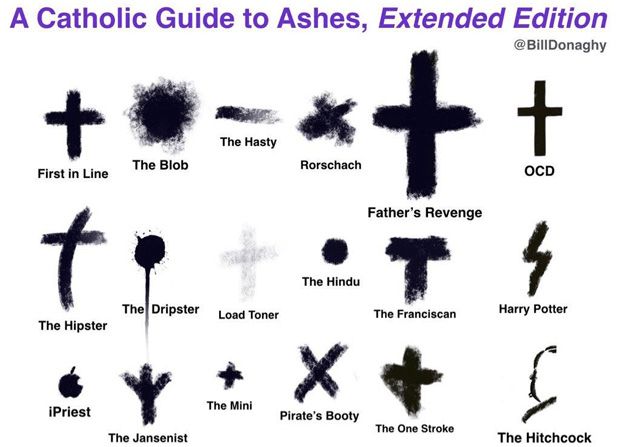
On Ash Wednesday, ashes marked on a person’s forehead are a sign of their Christian identity. They originate from the fronds which were burned from the previous year’s Palm Sunday. Since the palms have been blessed, using them for Ash Wednesday repurposes them. Burning palm fronds is also a sign of repentance.
This Year’s Celebration
This year, Ash Wednesday falls on the same day as Valentine’s Day—and if you’re one of the numerous Catholics who give up candy for Lent, this might be difficult for you!
BK students will attend the monthly all-school Mass on this day; however, Ash Wednesday is not a Holy Day of Obligation (Which is interesting, given that the attendance is usually very high each year across the globe).
Ash Wednesday Mass is slightly different from regular Sunday or Daily Mass in a number of ways. First, prior to the Liturgy of the Eucharist, the congregation lines up to have ashes applied to their foreheads. Anyone, including all non-Catholics, may receive the ashes. The priest will say either “Remember that you are dust, and to dust you shall return,” or “Repent and believe in the Gospel,” while marking a cross on the recipient’s forehead. The first saying reminds Christians of the passing away of life on Earth. The second, a passage from the Gospel of Mark, “reminds us that the salvation offered by Jesus in his paschal mystery requires our response,” according to EWTN.
Secondly, the Alleluia is not sung, nor will it be throughout the entirety of Lent. This is because of the penitential nature of Lent. “Alleluia” means “God be praised.” Additionally, the tone of the Mass is different. While Mass is traditionally a celebration, Ash Wednesday begins the season of repentance and renewal.
Another practice during Lent is for Catholics to abstain from eating meat on Fridays. This is obligatory; according to the United States Conference of Catholic Bishops, “For members of the Latin Catholic Church, the norms on fasting are obligatory from age 18 until age 59.” However, it is allowed to eat fish.
Easter and the resurrection of Jesus end this season, on Sunday, March 31. Until then, happy Mardi Gras–which literally means “Fat Tuesday” in French (it’s the day before Ash Wednesday when people typically indulge on what they’re going to fast from during Lent)–and have a great Lent!
Image acquired from catholicphilly.com
 The Bishop Kelly Newspaper