
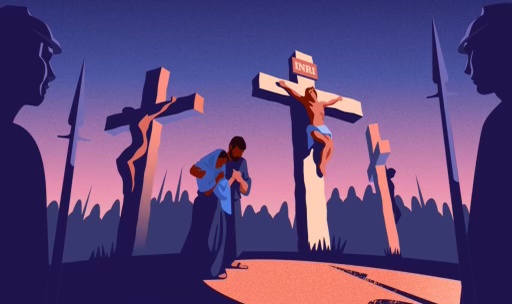
(photo credit: Hallow app)
Ash Wednesday, celebrated this year on February 22, marks the beginning of Lent, which we all associate with a 40-day period where we’re forced to give up our favorite candies, activities, and, every Friday, meat.
But, as shocking as this may sound, the complexity of Lent goes a lot deeper than McDonald’s Filet-O-Fish meat substitute. There’s a hidden religious aspect to it, as well.
Lent marks the preparation for the beginning of Easter, the day that many Christian religions widely recognize and celebrate Jesus’ resurrection. There are many traditions that have followed Lent throughout history, and some of them are a lot more orthodox than realized.
Fasting (only allowing for one full meal in the day) is expected on Ash Wednesday and Good Friday for those 18 years and older in Western Christianity, although it has recently become much more lenient. This creates a time of reflection and growth in personal spirituality. It’s a time to recognize God’s sacrifice and offer something back in return. In contrast, Eastern Christianity calls for a stronger sense of fasting on Fridays during Lent, eliminating meat, wine, oil, and even fish from the diet.
Almsgiving and charity are pushed for the entire year, but Lent is an especially good time to focus on giving back to the community. It doesn’t always have to be physical materials; volunteering at local food banks and donation centers is a great way to show God’s loving spirit here on Earth.
Scripture is also celebrated during the time of Lent. This time is recognized as a chance to learn more about the historical context of religion. And, there’s really no excuse not to read the Bible. It’s the basis of the entire faith, educational and rich in spiritual meaning, and, thanks to modern technology, you can even read it online while sitting on the couch, just as God intended.
Although there are differences between the Western Churches and the Eastern Churches — we all recognize the beginning of Lent as Ash Wednesday, but Eastern Churches actually start it on a Monday — there are a few things that are similar between the two. Regardless of the rules for fasting, Sunday is a holy day, and it’s a time to relax from the stresses of school and work and focus on God. Whether the celebration starts on Wednesday or Monday, 40 is a symbolic number and has circulated around Lent since the beginning, which was about AD 325. And, of course, whether you’re Christian or Catholic, Eastern Orthodox or Western Orthodox, Lent is a pure celebration that focuses on self-sacrifice and reflection.
 The Bishop Kelly Newspaper